People · November 2026 · 3 min read
The Next Generation Is Watching
Lyudmyla Römermann on the rules that are made today for tomorrow
Lawyer. Entrepreneur. Managing director of a football school. Lyudmyla Römermann thinks in two worlds and finds the same core in both: responsibility. There are people whose CV looks, at first glance, like a decision that is still pending. A lawyer on one side. The head of a football school on the other. Two professions, two logics, two languages. But when you listen to Lyudmyla Römermann, you quickly realise that for her this is not a contradiction that needs resolving. It is one and the same conviction in two different contexts. "In both areas there are rules," she says. "But knowing them is not enough. What matters is which decisions you make and what consequences they have."
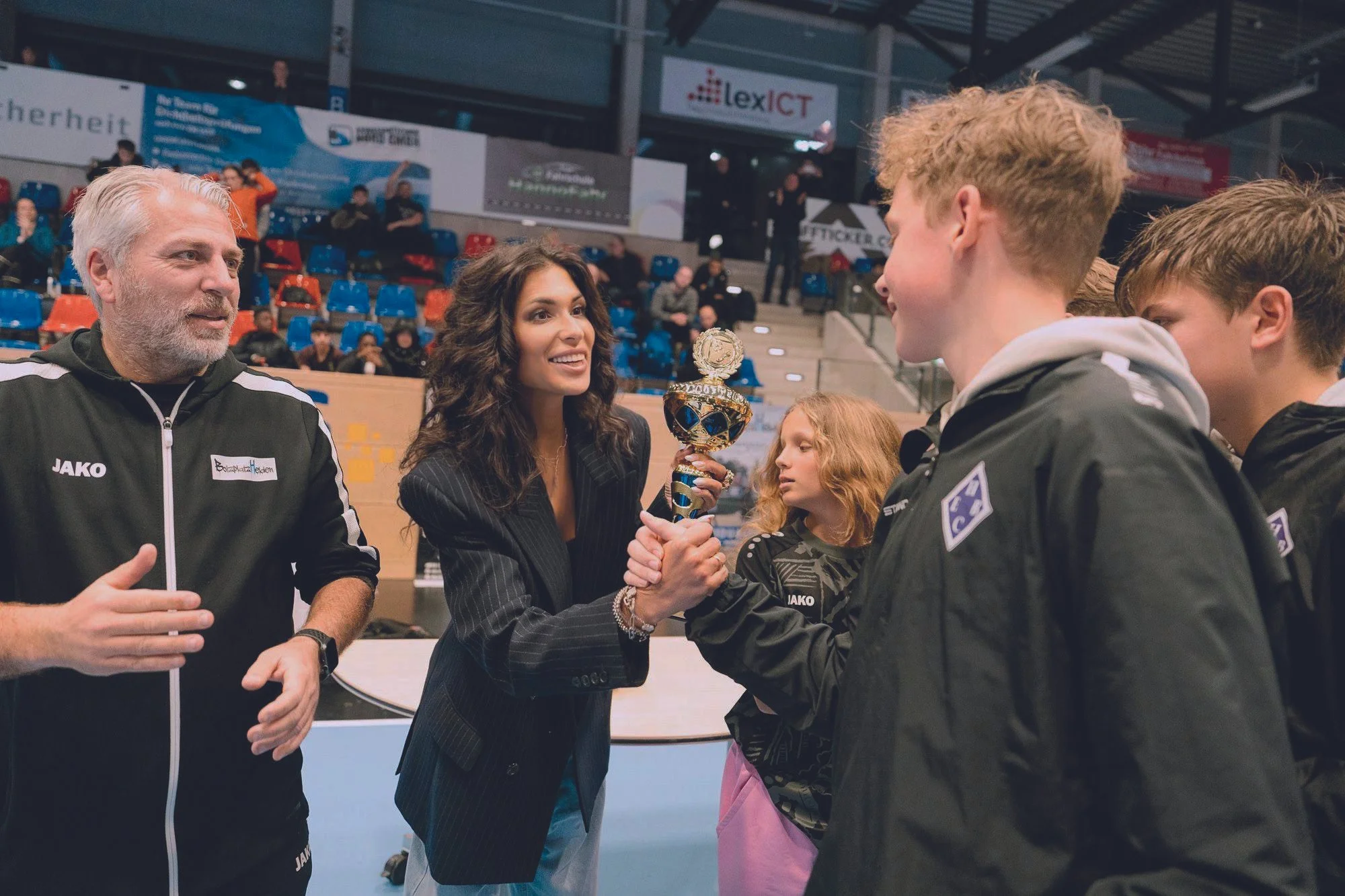
As a lawyer, she advises clients on assessing the consequences of their decisions. As managing director of the BolzplatzHelden football school, she talks to children and coaches on the pitch about respect, fairness and what remains when the final whistle blows. What drives her is not the combination of law and sport. It is the question of what a generation needs that is in the middle of becoming who it will be. BolzplatzHelden takes children from the age of four. The programme ranges from first training sessions to talent development and specific programmes for football clubs. On paper, it is a football school. In practice, it is a project that sees technique as the means and character as the goal. "Technique can be taught," says Römermann. "Character shows when a child has made a mistake or lost, or when something goes wrong for a teammate. How does the child behave then?"
That is the real benchmark by which BolzplatzHelden measures its work. Not goals and trophies. But the moment when a child does not disappear after a mistake, but asks for the ball again. When a stronger player helps someone who cannot quite manage something yet. When a child who used to stand on the sidelines brings a new teammate into the game on their own. "In moments like these, it is not the technique that changes," says Römermann, "but the child's attitude towards themselves and towards others."
Whoever demands respect and fairness has to live both themselves.
What she describes is not an educational concept on a flipchart. It is a conviction that comes from her own biography. Römermann grew up with sport herself. She knows what daily work and discipline do to a person, and what a coach can be when they do not just run drills, but actually see who is standing in front of them. That is exactly why BolzplatzHelden asks the same of its coaches as it asks of the children. "Whoever demands respect and fairness has to live both themselves." For Römermann, this is not negotiable. It is the foundation on which the entire project stands.
She knows that this project is not a classic business model. She also knows that it still needs one that works. "I have no illusions: good work with children needs strong coaches, pitches, equipment and reliable funding. Good intentions alone are not enough." What she expects from companies that get involved is therefore not philanthropic sentiment, but a clear perspective: the children on the pitch today are tomorrow's employees, founders, customers and business partners. Whoever invests in them today is not investing in an initiative. They are investing in a generation.
When asked what BolzplatzHelden should be in ten years, Römermann does not answer with growth figures or expansion plans. She answers with an image. Adults who come back to their former coach for no particular reason. Not for an anniversary, not for a photo. Simply to be where they learned who they are. "If that happens," she says, "then the connection did not end with the final whistle. For me, that would be the real victory of BolzplatzHelden." There are many ways to define success. Lyudmyla Römermann has chosen the one that lasts the longest.