
Oscars 2026
Glamour, History, and Moments We’ll Never Forget
When the lights go up at the Dolby Theatre, we know: it’s that night again, when dreams and glamour walk hand in hand. The Oscars—Hollywood’s most iconic moment—are not just an awards show. They are a cultural event, a collective heartbeat, where films become legends and the people we admire become unforgettable. This year was especially remarkable. Not just because One Battle After Another triumphed as Best Picture, but because moments unfolded that will go down in history—moments that remind us why we love cinema.
Michael B. Jordan took home the Oscar for Best Actor, and his smile on stage felt like a hug for the entire audience. His speech was full of gratitude, full of acknowledgment for those who came before him—and that’s exactly why it was impossible not to fall a little in love with him right then and there. It was a moment that showed us talent alone isn’t enough; heart counts on this stage too. Jordan reminded us that success doesn’t happen in isolation—it’s the product of inspiration, hard work, and the people who believe in us.
But the greatest sign of change and progress was undoubtedly Autumn Durald Arkapaw winning the Oscar for Best Cinematography—the first woman ever to do so. A historic moment showing that Hollywood is slowly starting to see the people behind the camera—not just in front of it. Her achievement is not only a personal triumph but a symbol of what is possible when talent finally receives the recognition it deserves. Suddenly, it becomes clear that innovation and artistic vision know no bounds—and that the view through the lens is just as vital as the stories we see on screen.
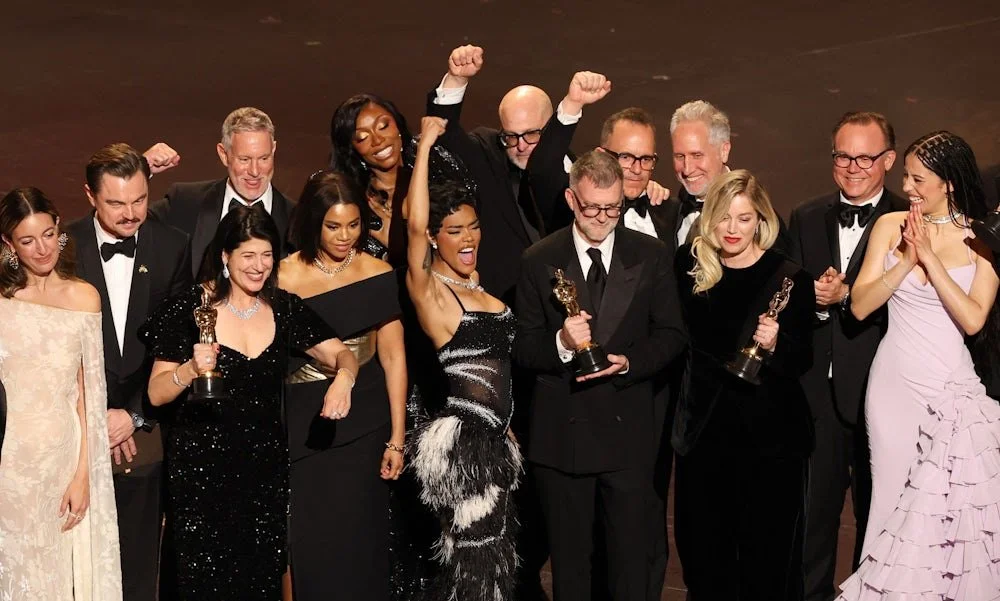
Speaking of “firsts,” this was also the year Cassandra Kulukundi was recognized for Best Casting—a moment often overlooked but crucial nonetheless. Casting is not just selection; it’s the heartbeat of a film—the art of finding characters who capture our imagination and make us believe we are witnessing real lives. On a night when so much history was made, this moment symbolized precisely what cinema is ultimately about: people who move us, entertain us, and inspire us.
Amid all the historic achievements, the glamour of the red carpet did not go unnoticed. From classic, elegant silhouettes to bold, modern statements—each gown, each look was a declaration, a story in itself. It felt as though the stars were presenting not just awards, but their unmistakable style. This visual opulence, combined with the emotional victories on stage, made the evening a total work of art—a night that captivated us all.
And then there were the small, intimate moments that linger the longest: embraces between colleagues, sighs of relief, tears left unhidden, and the way the camera lingered on these moments—not because it had to, but because we wanted to feel them. These are the moments that remain after the applause fades: real emotion, real connection, and real recognition of what cinema means to us all.
What made this Oscar night truly special wasn’t just the glamour or the wins, but the blend of emotion, history, and inspiration. Every winner, every speech, every moment on stage leaves a mark—memories to share, analyze, and celebrate. We are not just witnessing an awards show; we are becoming part of a collective memory, a night where culture, creativity, and vision converge.
And that’s why we love the Oscars. They are more than just trophies. They are stories we will tell for years to come. They are moments that make us dream. They are that small, sparkling pulse of Hollywood that once a year captures everything we love about film: glamour, emotion, talent—and a little bit of that indescribable magic that enchants us all.