Business · November 2026 · 3 min read
From Social Media to CEO
Emma Svenningson between content, community and building a real brand
There is a moment in the creator economy that is harder to navigate than any algorithm change: the moment when you stop just building reach and start building something that can exist without you. Emma Svenningson did not wait for that moment. She planned it from the very beginning.
Anyone who knows Emma's story knows the version with the late-night cooking videos. The high school graduate who downloads TikTok, spends two years producing fashion content without a big breakthrough and then, without a strategy and without a content calendar, simply sets up the camera while she cooks. Late at night. Sourdough. Pasta. The things she is genuinely passionate about. And suddenly there is a community that does not follow a trend, but a person.
What often gets lost in this story is that Emma wanted to be an entrepreneur before she became a creator. At fourteen, the wish was already there. At nineteen, her first own projects followed, together with her current business partner Alexander Schlüter: a tutoring company and a shop for premium second-hand clothing. Along the way, she recognised early on what many in the creator economy only understand years later: content can do more than reach people. It can make them excited about a product.
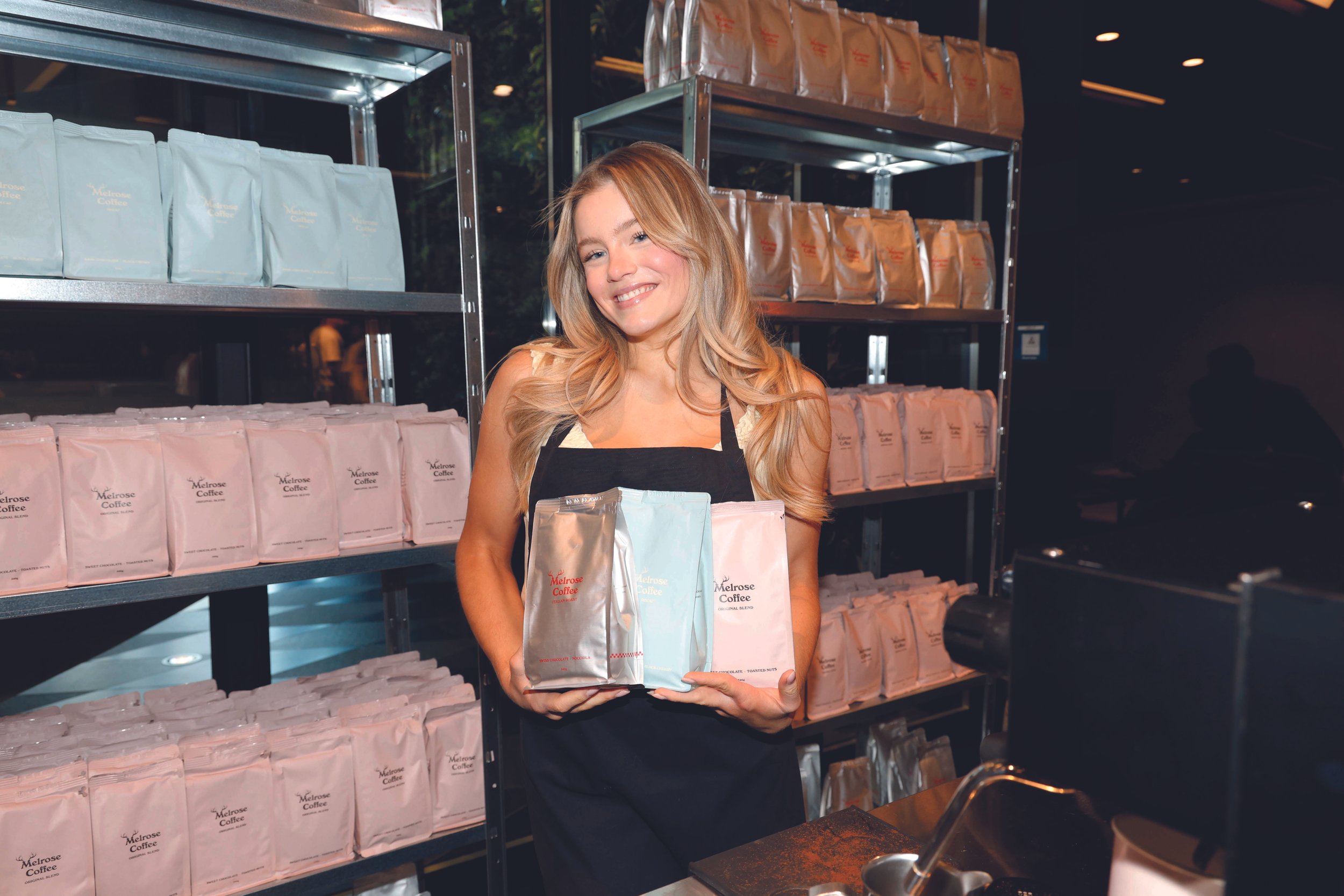
When her food videos brought the breakthrough, the question was therefore not whether she wanted to build something of her own. It was what. The answer was close and concrete. Emma had been drinking coffee every day since she was a teenager, but never found the one roast that reliably tasted good every morning. In 2024, Emma and Alex founded Melrose Coffee with around 2,000 euros in starting capital. The roastery was just minutes from her parents' house. Bags were packed by hand. They fulfilled the first orders in their own living room, together with family and friends, late into the night.
What sets Melrose apart from many creator brands is not the product alone. It is the way it came about and the way it grows. Emma did not use her community as a distribution channel. She took it along. Into the roastery, into product development, into the long evenings when the parcels got finished. Today, Melrose offers matcha from Japan alongside its coffee, almost always sold out, and Emma takes her community along to the plantations in Uji too. More than 40,000 customers buy the products, not because an algorithm sent them there, but because they followed the journey.
A first purchase can come from trust in the person. A second only if the product convinces.
Emma's philosophy behind it is as simple as it is consistent: a first purchase can come from trust in the person. A second one only if the product convinces. That is why new products are not supposed to follow one another as quickly as possible, but to become part of a daily routine in the long term. Feedback flows in during development, not afterwards. Community events where new products are tested together before they launch are part of the process, not part of the campaign.
What holds Emma's content together today is not a single topic, but an identity. Food is the common thread, around which beauty, fashion and lifestyle unfold naturally. People do not just follow a recipe, but the person behind it. This connection, Emma says, is the real difference between short-term reach and a long-term community. She now appears as a speaker at events such as OMR. The creator has become an entrepreneur, and the entrepreneur has become a voice for a generation that wants to be both at once.
What remains in the end is the goal behind everything: building a brand that has its origins in the community, but can also exist beyond the person Emma Svenningson. It started at night in a kitchen, with a camera and no plan. What came of it shows that sometimes, that is exactly the most precise plan of all.