Beauty · November 2026 · 4 min read
Douglas and the Art of Belonging
Why one of Europe's biggest beauty retailers wants to become a community
Perhaps the biggest change in beauty retail right now has surprisingly little to do with new products. The serum you are looking for is available in a dozen shops and on a hundred websites, often delivered by tomorrow morning. Selling is no longer the difficult part. The difficult part is giving people a reason to walk in at all.
For a long time, the beauty store was the place where discovery happened. You went in to see what was new, to try a lipstick on the back of your hand, to ask someone which foundation would actually match your skin. Today, much of that discovery has moved to our phones. A product goes viral before it even reaches the shelf, reviews are read on the sofa, and the shopping basket is filled somewhere between two stories. So what is left for the store? Quite a lot, as it turns out. But only if it stops behaving like a warehouse with good lighting.
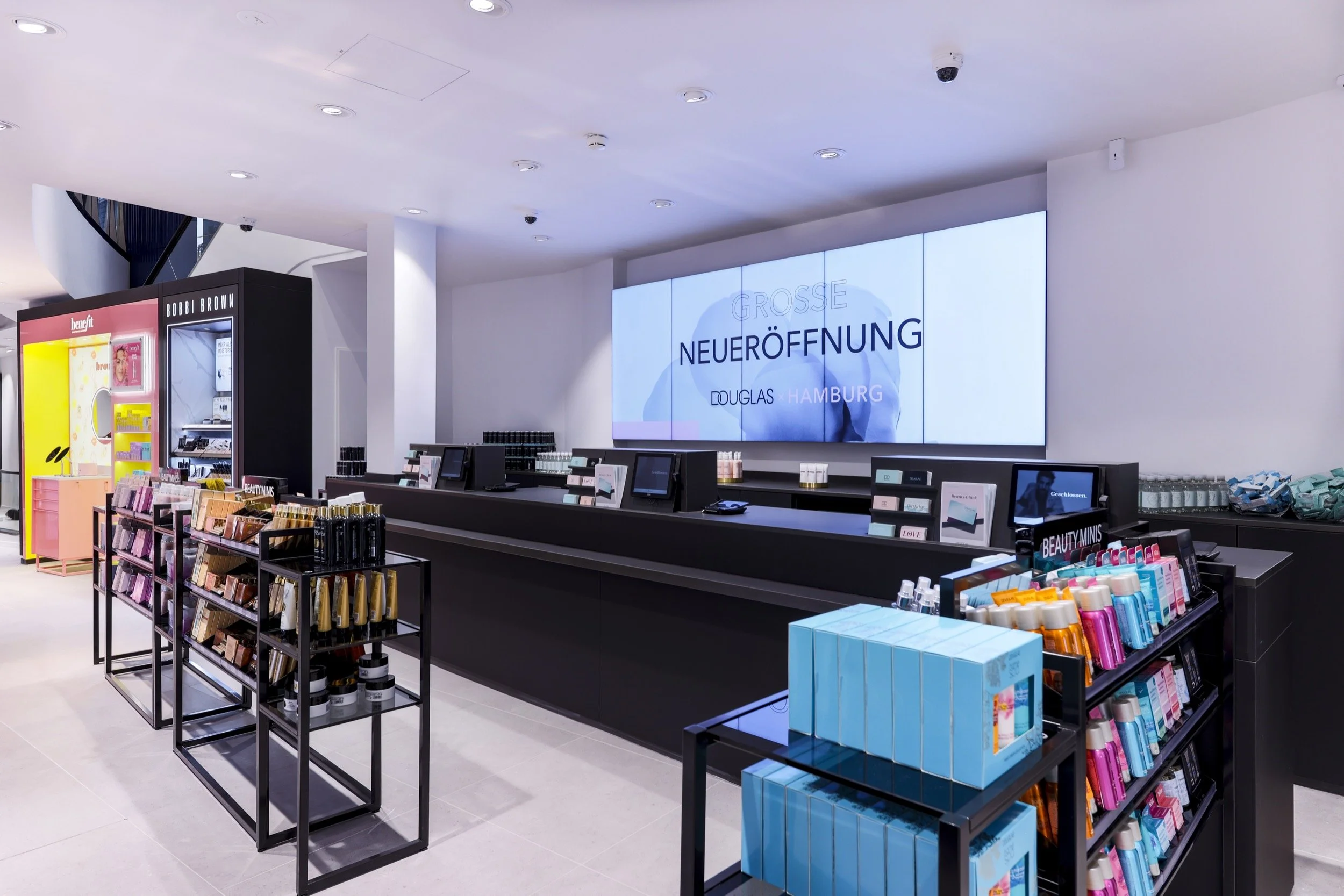
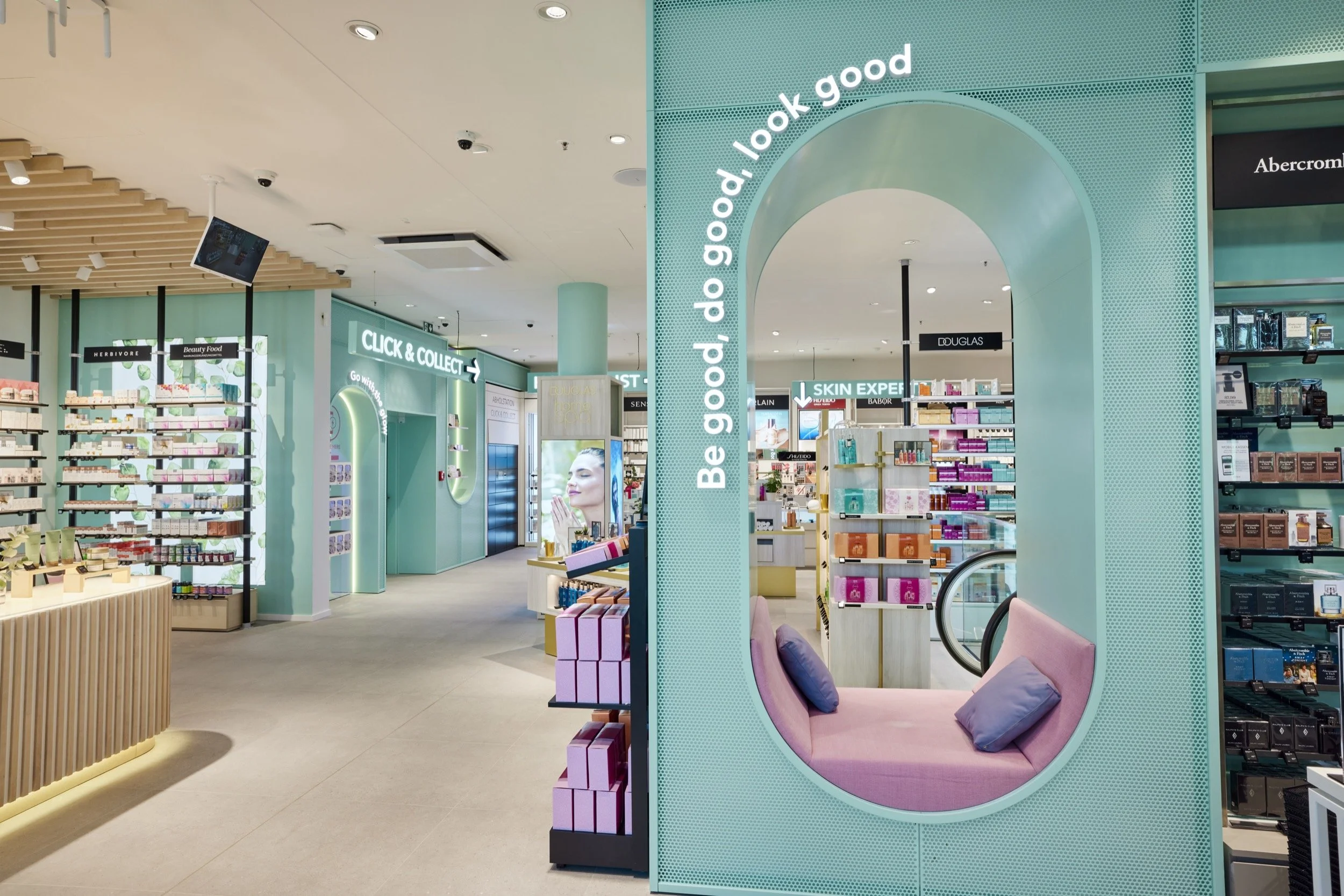
Douglas seems to have understood this very clearly. According to a report in the German trade publication Horizont, the company wants to develop from a beauty retailer into a community platform, with experiences, advice and services designed to bring customers closer to the brand. At first, this sounds like a strategy paper. In the stores, it already looks quite concrete: launches and events, a quick make-up refresh, skin analysis or fragrance advice, many of them free of charge. None of this replaces the product. But it changes the reason why you come through the door.
And this is exactly where it gets interesting. Community is one of those words every brand likes to use and very few manage to fill with life. A logo on a tote bag is not a community. A hashtag is not a community either. A place where people meet, learn something new and leave with the feeling that someone took time for them, however, is. For a retailer, this turns the store from a cost into a stage, and the customer from a single transaction into a regular.
Beauty is perhaps the category where this idea makes the most sense. A fragrance cannot be smelled through a screen. The texture of a cream, the way a shade looks in daylight, the small trick a make-up artist shows you in two minutes: all of this needs a real place and, above all, a real person. Trust plays a bigger role here than in almost any other category, because what you buy ends up on your skin. Good advice is not an extra in beauty. It is part of the product.
Good advice is not an extra in beauty. It is part of the product.
At the same time, the challenge is obvious. Douglas operates around 1,970 stores in 22 European countries. Creating the feeling of a small, personal place at that scale is a completely different task from running one charming boutique. Community cannot be rolled out like a new shelf system. It depends on the people in each store, on their knowledge, their time and their mood on a busy Saturday. That is what makes the idea so ambitious, and so interesting to watch.
A new chapter at the top
The timing is remarkable, too. On November 1, Jean-Marc Bellaiche took over as CEO of the Douglas Group, succeeding Sander van der Laan, who led the company through its omnichannel transformation and its stock market listing in 2024. Bellaiche's background reads almost like a résumé for exactly this idea: he led the luxury, fashion and beauty practice at Boston Consulting Group, sat on the executive committee of Tiffany & Co., ran the French department store group Printemps and most recently headed the resort operator Sani/Ikos. Luxury, retail and hospitality in one career. How far he will take the idea of community will show in the coming months, in the stores, at events and in the app.
The real test, though, will not be the flagship store in a big city. It will be whether the feeling of belonging also works on an ordinary Tuesday afternoon in a smaller one, when nobody is filming and there is no launch party. That is where community either exists or does not.
Because in the end, brands that only sell can be replaced. Brands that bring people together become a habit. And in a market where the next product is always just one click away, a habit may be the most valuable thing a brand can own.