FASHION | SEPTEMBER 2026 | 5 MIN READ
DIRNDL GOES NEW YORK
HOW LENI KLUM IS BRINGING TRADITIONAL DRESS INTO THE FASHION WORLD
A dirndl belongs in Kitzbühel, Munich or at Oktoberfest. At least, that was the unspoken rule for a long time. But what happens when you take it to New York of all places? That's exactly what Leni Klum is doing now together with Sportalm — and suddenly traditional dress feels less like heritage and more like fashion. What began last year with two dirndls designed specifically for Leni is becoming its own capsule collection in 2026. The 22-year-old New Yorker, who is already working internationally as a model across runways, editorials and campaigns, brings together two things that could hardly seem more contradictory at first glance: Alpine heritage and the attitude of a global fashion capital.
The campaign was therefore not photographed somewhere in the mountains, but right in the middle of New York City. Between Soho, urban architecture and the skyline, the dirndl suddenly takes on a completely different energy. And perhaps that is exactly the point. Traditional dress no longer functions solely through a sense of homeland and heritage. It functions through styling, attitude and personality. The collection itself demonstrates this as well. At its center are three designs: a light blue gingham dirndl with a white apron, as well as two two-piece styles in cream and chocolate brown that break much more strongly with the classic idea of traditional dress. Corset-like tops, a lower-set skirt line and an overall more modern silhouette give the looks a fashion attitude that feels more like street style than a traditional festival.
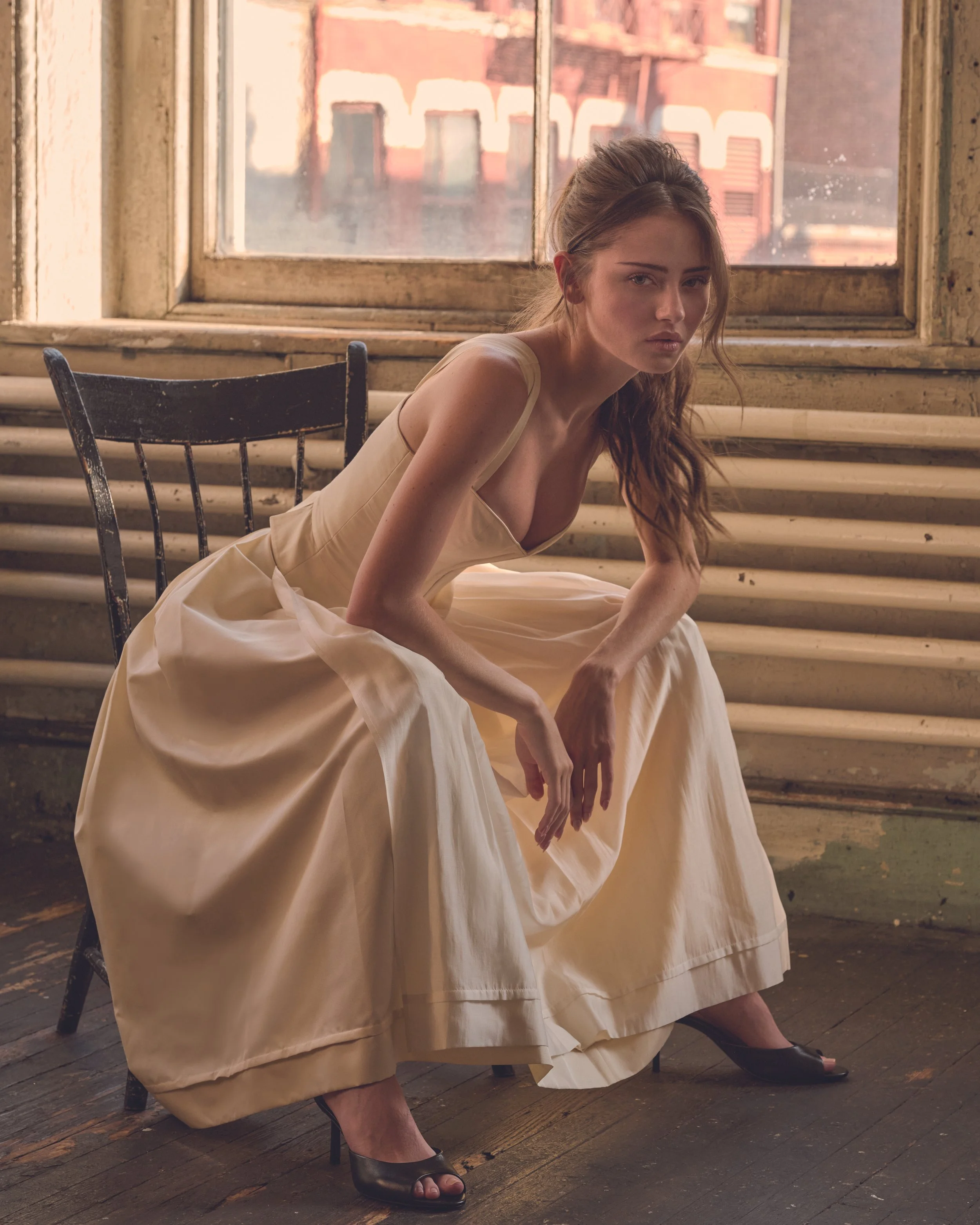
And suddenly the question arises: Why should a dirndl always have to look like a dirndl? This is exactly where the collection becomes interesting. Because Leni isn't necessarily changing the garment itself — she's changing its context. A dirndl in Kitzbühel speaks of tradition. A dirndl in New York speaks of identity. The two are no longer mutually exclusive. The light blue style in particular shows how little it sometimes takes to reinterpret a classic. Checks, feminine lines and the white apron recall traditional dress aesthetics, but through the pared-back styling, they also appear light and modern. The two-piece styles take this idea one step further. The bodice can be worn with or without a white silk blouse, allowing it to function almost like an independent fashion piece. This modularity fits perfectly with a generation that sees clothing less as a predetermined outfit and more as a personal styling system. Perhaps that's also why traditional dress is becoming so interesting again. Fashion famously loves nothing more than a cultural code that can be reinterpreted.
And the dirndl code is strong. Corset, apron, silhouette — everything is instantly recognizable. At the same time, the garment can be surprisingly easily translated into a modern wardrobe. Leni Klum's collection turns it into not a folkloric statement, but an international fashion story. The fact that the campaign was created in New York is therefore more than just a pretty change of location. It's a message. The dirndl doesn't have to remain in the Alps to retain its identity. It can function just as naturally between skyscrapers as it does in front of a mountain lodge. Perhaps that is also the new definition of heritage fashion: tradition is not preserved, but set in motion. And that's precisely what makes it interesting for brands like Sportalm. For decades, the Kitzbühel-based company has combined Alpine aesthetics with fashion, positioning traditional dress not merely as a seasonal product but as part of a larger lifestyle world. The collaboration with Leni Klum brings this idea to a new generation. Her connection to New York and her international modeling career provide the traditional silhouette with a new cultural context in which to be translated. The fact that two Sportalm dirndls individually created for her already attracted attention at the HeidiFest and around Oktoberfest in 2025 was apparently only the beginning. And perhaps that's the most exciting development: Traditional dress doesn't become younger by hiding its past. It becomes younger by allowing itself to be worn differently.
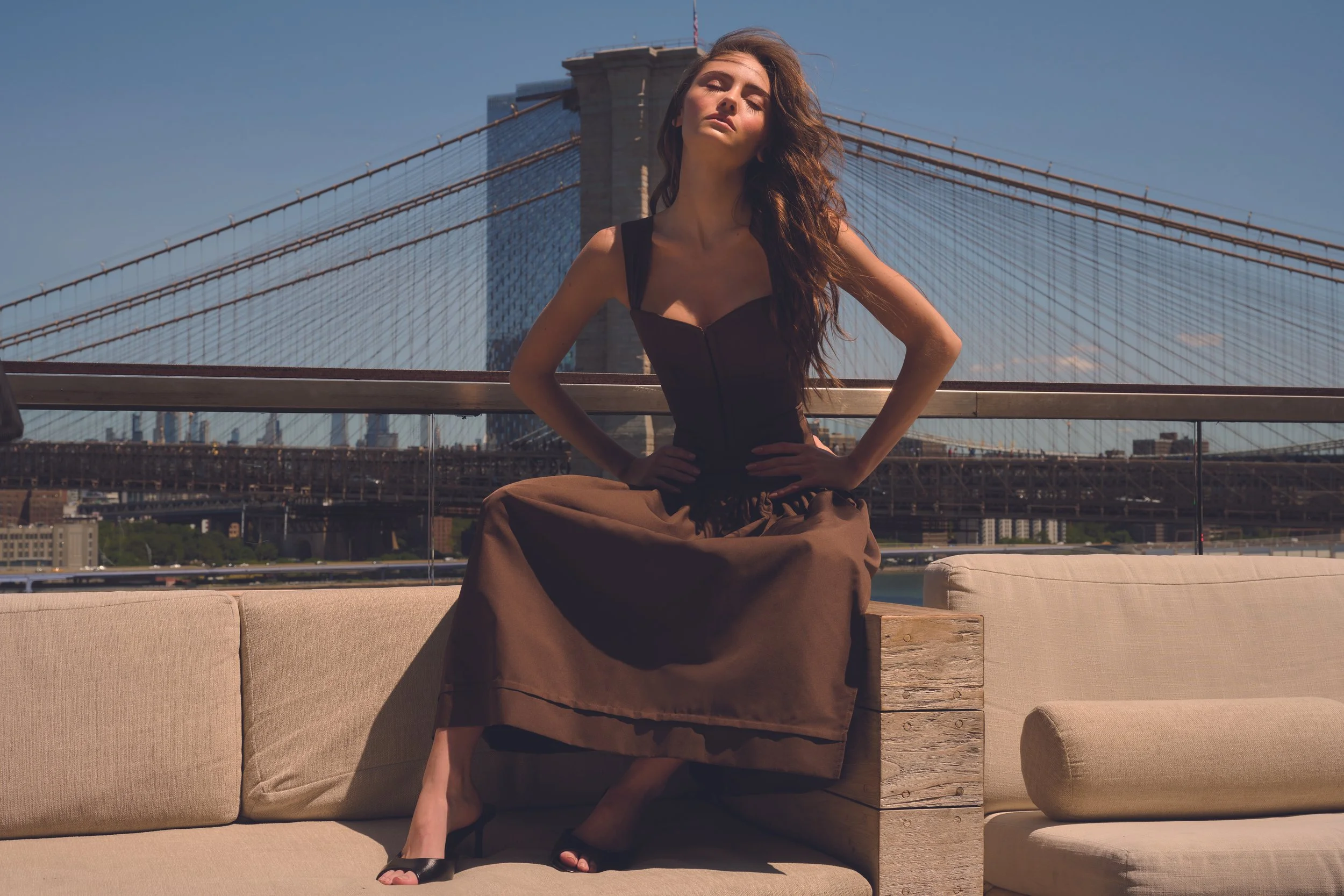

At a time when fashion is increasingly moving between heritage and pop culture, a dirndl can suddenly be just as much a part of an international wardrobe as a blazer, a leather jacket or a slip dress. Leni Klum isn't turning it into a “German Girl” costume for the American market. She wears traditional dress as fashion. And perhaps that's the real modernization: The dirndl itself doesn't have to change — our idea of where and how it can be worn does. Kitzbühel remains Kitzbühel. New York remains New York. But somewhere in between, a new version of traditional dress is emerging — less folkloric, more personal, and quite clearly ready for Fashion Week.