
SPORT | JULY 2026 | 5 MIN READ
Here's the thing about Cristiano Ronaldo at 41: he cried in Dallas, and somehow that was still the most disciplined thing in the room.
Portugal's World Cup ended on July 6th — a 0-1 loss to Spain in the Round of 16, decided by a Mikel Merino goal in stoppage time. Ronaldo played the full ninety minutes and touched the ball eighteen times. Afterward, he confirmed what everyone already suspected: it was his sixth World Cup, his 27th match at the tournament, and his last. Six tournaments. Never a title. And still — he cried, waved to the fans one more time, and then, almost immediately, switched back into character. "Before Cristiano, Portugal had never won a major title," he said of himself, in the third person, minutes after the tears dried.
I keep coming back to that sentence. Not because it's arrogant — though sure, it is — but because it's the most honest thing a 41-year-old athlete could say about his own myth. He wasn't defending a football career in that moment. He was defending a system. Twenty years of it.
Because here's what nobody talks about enough: Ronaldo was never really a footballer with good habits. He's a habits practice that happens to play football. The five-times-ninety-minute polyphasic sleep cycles. The body treated less like an asset and more like infrastructure — maintained, audited, upgraded, decade after decade, long after the biological argument said he should have slowed down. At 41, in a World Cup, starting. That's not talent anymore. Talent has an expiration date. This is something closer to engineering.
The Man Who Never Stopped Wanting It
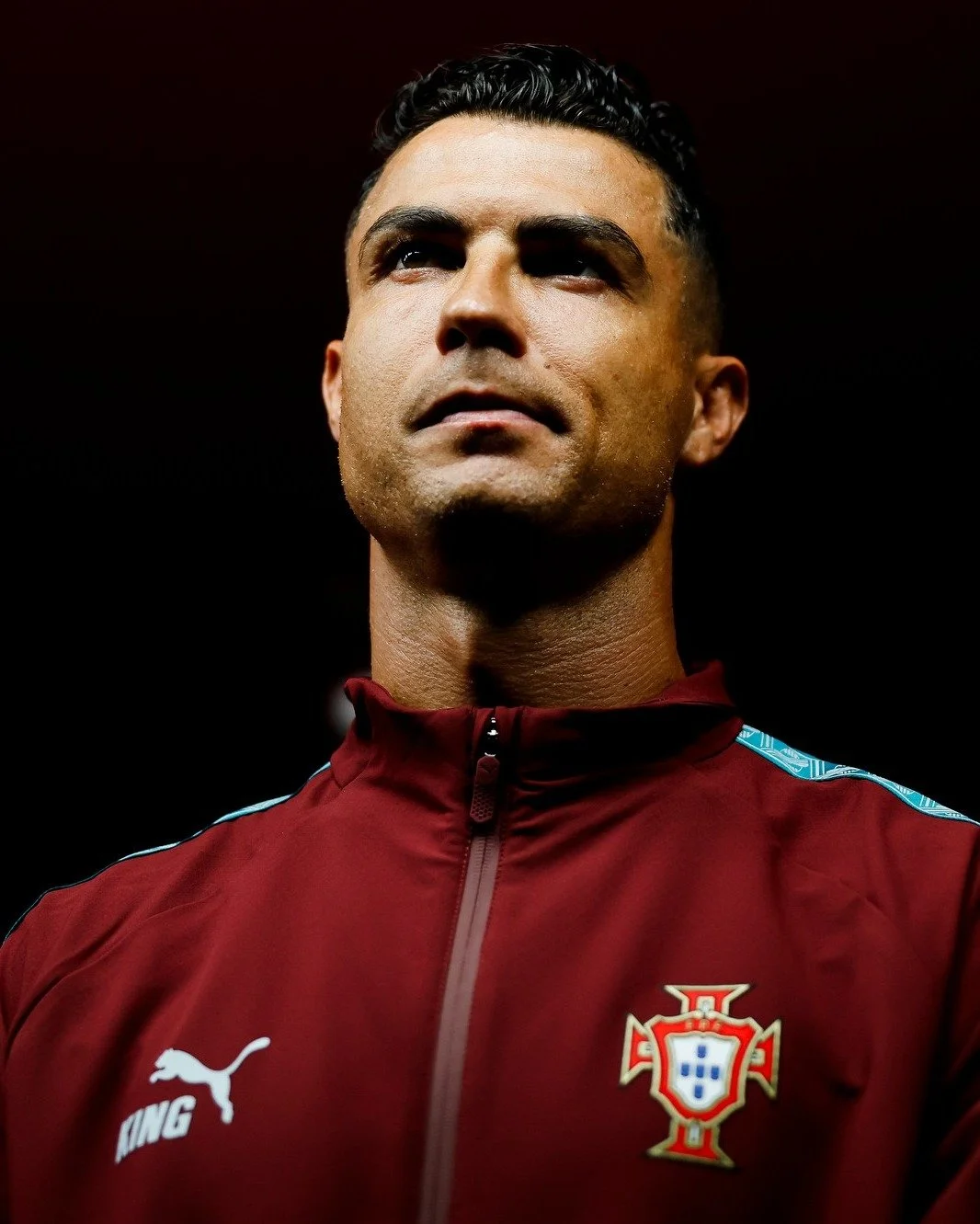
{photo courtesy / repost of Christiano Ronaldo
And the business instincts followed the same logic. Pestana CR7 — a hotel chain carrying his initials into cities that have nothing to do with football. A fragrance line. Georgina Rodríguez, no longer just "the partner," but a brand with its own gravitational pull, its own audience, its own commercial life. None of this reads as an athlete cashing in at the end of a career. It reads as a man who understood, earlier than most, that the body is the first product — and everything else is just distribution.
Which is maybe why this farewell felt different from the usual athlete-retirement theater. His coach, Roberto Martínez — who stepped down after the elimination — put it plainly: whatever comes next, people should remember what Ronaldo gave this tournament, and take him as an example of the man behind the athlete. Not the goals. The discipline behind the goals.
That's the part I think actually lands with the twenty-somethings who've never known football without him. Not the Ballon d'Ors. Not the trophies he didn't win, either. It's the evidence, right there in a body still competing at 41, that self-control isn't a phase you grow out of once you've made it. It's the thing that lets you keep making it, year after year, long after everyone else has quietly logged off.
Portugal goes home without the one trophy Ronaldo actually wanted. He goes home with something the record books can't quite capture: proof that wanting it, at full intensity, for two decades straight, was never actually optional. It was the whole method.