
WHEN ART MOVES IN MINOR KEYS
From May to November 2026, Biennale Arte 2026 will once again transform Venice into one of the world’s most influential stages for contemporary art. Spread across the historic sites of the Giardini, the Arsenale, and numerous locations throughout the city, the 61st International Art Exhibition arrives at a moment in which global cultural discourse is increasingly shaped by questions of identity, fragility, memory, and transformation.
This year’s edition carries particular significance. Curated under the title In Minor Keys, the exhibition was conceived by the late curator Koyo Kouoh, whose intellectual and cultural influence has shaped contemporary art discourse far beyond institutional boundaries. Following her passing, La Biennale di Venezia announced that the exhibition will be realized exactly according to her vision and curatorial framework, in close collaboration with her family. The decision is more than an act of continuity—it is a statement about authorship, legacy, and the importance of preserving curatorial thought as cultural practice. The title In Minor Keys already suggests a deliberate shift away from spectacle and towards nuance. Rather than positioning art as loud commentary or visual excess, the exhibition appears to focus on quieter forms of expression—on works that operate through atmosphere, rhythm, intimacy, and emotional depth. In music, minor keys are often associated with tension, vulnerability, introspection, and complexity. Translated into the language of contemporary art, this becomes a powerful curatorial proposition.
Within the context of today’s cultural landscape, this direction feels particularly relevant. After years dominated by acceleration, hypervisibility, and overstimulation, many institutions and artists are moving towards slower, more reflective forms of engagement. The emphasis is no longer solely on scale or provocation, but on resonance—on how art can create emotional and intellectual presence without relying on spectacle.
BIENNALE ARTE 2026
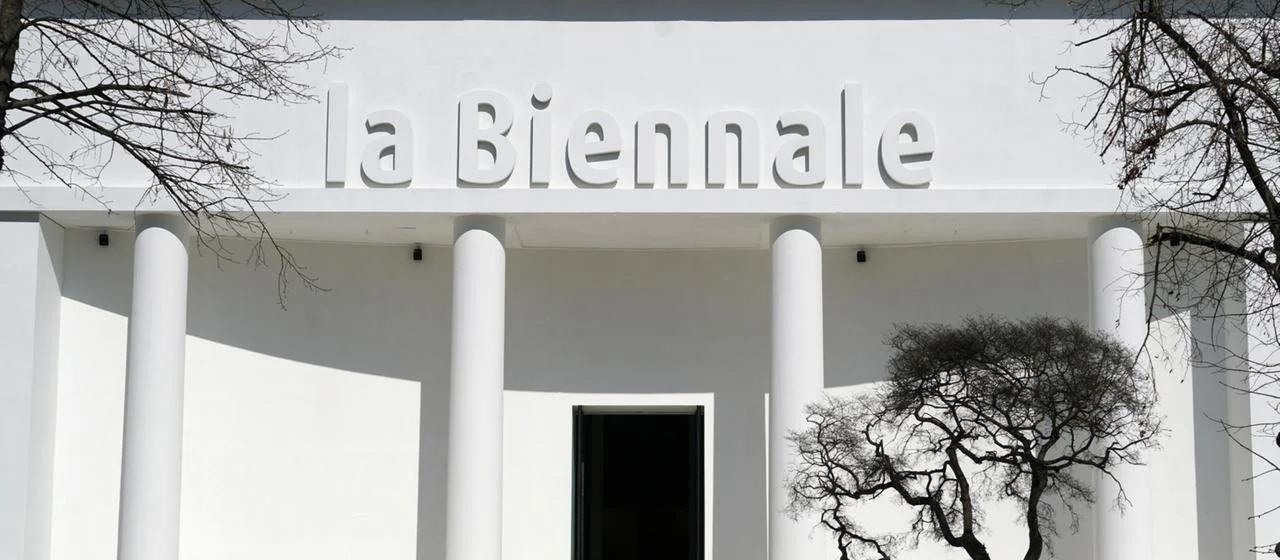
Venice itself intensifies this dynamic. Few cities embody contradiction as strongly: beauty and decay, permanence and fragility, history and transience coexist in almost cinematic density. During the Biennale, the city becomes more than a backdrop; it functions as an extension of the exhibition itself. Historic palazzos, hidden courtyards, industrial spaces, and temporary installations dissolve into one continuous cultural landscape where art is encountered not only inside institutions, but throughout the urban fabric.
What distinguishes the Biennale Arte 2026 from traditional art fairs or market-driven events is precisely this relationship between context and content. The Biennale has never been solely about individual works—it is about positioning ideas within a global cultural moment. National pavilions, independent projects, and curated exhibitions collectively create a fragmented but highly revealing portrait of contemporary society.
Kouoh’s curatorial approach has long been defined by precisely this sensitivity towards layered narratives and underrepresented perspectives. Her work consistently challenged dominant structures within the art world while creating space for voices that operate outside traditional Western frameworks. The continuation of her exhibition therefore carries symbolic weight. It transforms the Biennale into more than a cultural event; it becomes part of an ongoing dialogue about memory, representation, and institutional responsibility.
At the same time, the exhibition arrives during a broader shift within contemporary art itself. Increasingly, artists move fluidly between disciplines—combining installation, sound, architecture, film, performance, and spatial design into immersive environments. Art is no longer confined to objects; it is experienced as atmosphere, as movement, as emotional architecture. This evolution aligns closely with the conceptual direction implied by In Minor Keys: a focus on sensation rather than noise, on subtlety rather than immediacy.
In this sense, the Biennale Arte 2026 may become less an exhibition of answers and more an exhibition of emotional frequencies—spaces that invite reflection instead of consumption, attention instead of distraction.
And perhaps that is precisely what makes this edition so significant:
in a world increasingly defined by volume, speed, and visibility, In Minor Keys proposes the radical idea that quietness itself can become a form of cultural power.